

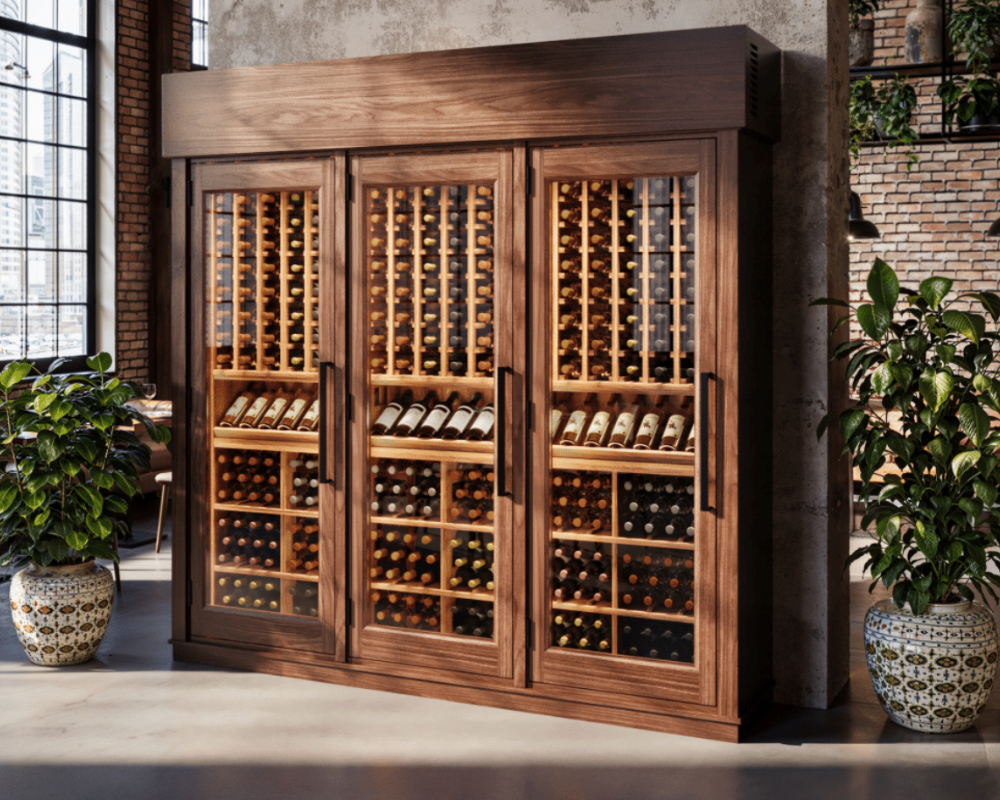
A custom wine cellar can range from a simple storage upgrade to a complete room transformation. Because scopes vary so widely, there is no single answer to the question, ‘How much does a custom wine cellar cost?’ The final investment depends on the space, construction requirements, climate control, materials, storage capacity, and level of customization.
Here’s what goes into determining the cost of a custom wine cellar and where your project may fall.
The Biggest Factors Behind Wine Cellar Cost
Several factors typically have the greatest impact on the budget:
- Room size: A larger cellar requires additional racking, cabinetry, materials, lighting, and potentially greater climate-control capacity.
- Existing space: Converting an existing room can have different construction needs than building a wine room from scratch.
- Wine collection: The number and type of bottles you plan to store will influence the amount and configuration of racking.
- Climate requirements: A dedicated cooling system, insulation, and vapor barrier can significantly increase project scope.
- Finishes: Wood species, stains, doors, hardware, countertops, architectural details, and lighting all affect material and installation costs.
- Customization: Unique layouts, display areas, specialty storage, and architectural features require additional design and fabrication.
Deciding Between a Passive or Climate-Controlled Wine Cellar
One of the first cost decisions is whether the cellar needs active climate control.
A passive wine cellar uses naturally stable environmental conditions rather than dedicated cooling equipment. This approach can work for certain spaces, particularly when temperature and humidity remain suitable throughout the year.
A climate-controlled cellar requires additional planning. The room may need proper insulation and a vapor barrier before cooling equipment is installed. Electrical work, equipment selection, ventilation, and installation can all become part of the project.
How the Existing Space Changes the Budget
Your starting space heavily influences the project scope. Converting an under-stair area or small closet may require minimal structural changes, whereas a basement transformation or dedicated cooling setup might demand insulation, vapor barriers, electrical work, and specialized climate control.
Four popular conversion options include:
- Under-stair conversion: Compact storage using previously underused square footage.
- Closet conversion: A practical option for homeowners with an existing enclosed space.
- Basement transformation: Suitable for larger collections and dedicated entertaining areas.
- Purpose-built wine room: The most flexible option for custom layouts, architectural details, and high-capacity storage.
Materials and Design Features Affect the Final Price
Material and finish choices can also influence the overall cost. Mountain Sky Closets & Garages offers custom wine storage in sapele, walnut, and white oak, along with custom stains, textured panels, leather accents, lacquered finishes, and hardware options.
Additional features such as archways, coffered ceilings, custom doors, display areas, and integrated lighting can further increase the project scope.
Get a Custom Wine Cellar Cost Estimate with Mountain Sky Closets & Garages
The most accurate way to determine custom wine cellar cost is to evaluate the entire project rather than price the racking alone. Mountain Sky Closets & Garages provides custom wine cellar design services in Steamboat Springs, including consultations and 3D design planning.
Contact us to discuss your space, wine collection, and design goals, and get a free estimate.